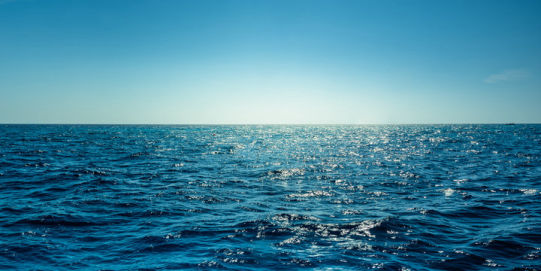
The global ocean is the life-support system of our planet, covering approximately 71% of Earth's surface and holding about 97% of its water. It is a single, continuous body of saline water, traditionally divided into five distinct oceans. This massive expanse drives global climates, produces over half of the world's oxygen through marine flora, and remains one of the least explored frontiers in human history.

5 MAJOR OCEANS

PACIFIC

The Largest:
Covers more than 30% of the Earth's surface, making it larger than all the Earth's landmasses combined.

The Deepest:
Home to the Mariana Trench, the deepest point on Earth.
ATLANTIC

The Busiest:
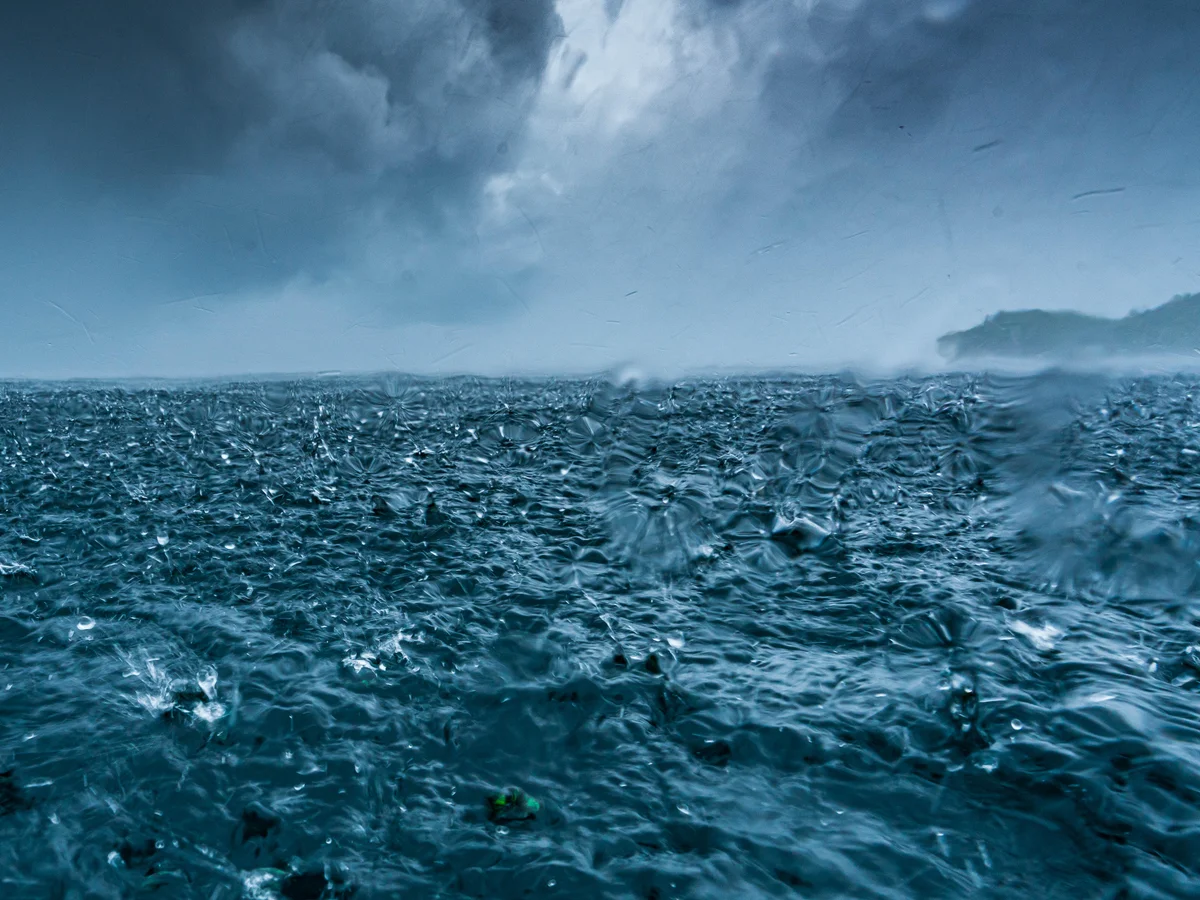
The second-largest ocean, separating the Americas from Europe and Africa. It is heavily trafficked and highly saline.

The Ridge:
Features the Mid-Atlantic Ridge, the longest underwater mountain range.
INDIAN

The Warmest:
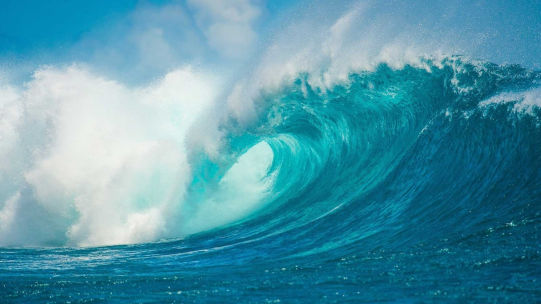
The third-largest ocean, bounded by Asia, Africa, and Australia. Its warm waters limit plankton growth but support unique tropical ecosystems.
SOUTHNERN

The Coldest:
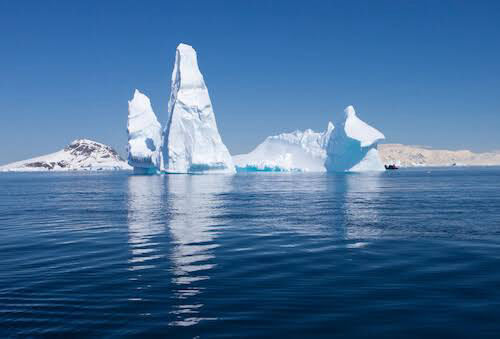
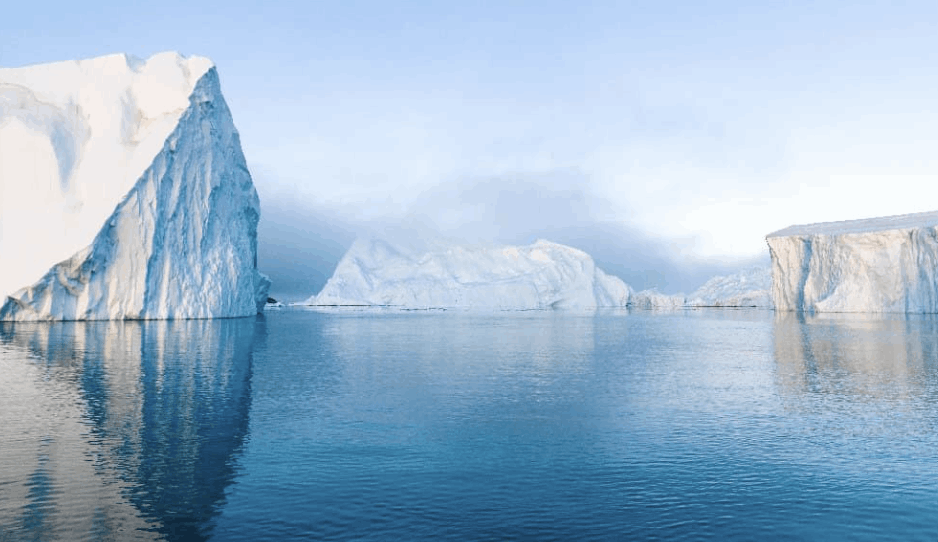
Encircling Antarctica, it is defined by the powerful Antarctic Circumpolar Current. It is crucial for driving global ocean circulation.
ARTIC

The Smallest:
Located around the North Pole, it is the shallowest ocean and remains largely covered by sea ice throughout the year.
SCALE. DEPTH. DIMENSIONS 

Total Surface Area:
Approximately 361 million square kilometers (139 million square miles).Average

Depth:
The ocean floor rests at an average depth of 3,688 meters (12,100 feet).

The Extreme Frontier:
The absolute lowest point is Challenger Deep in the Pacific Ocean, plunging down to nearly 11,000 meters (36,000 feet)—deep enough to submerge Mount Everest with kilometers of water to spare.

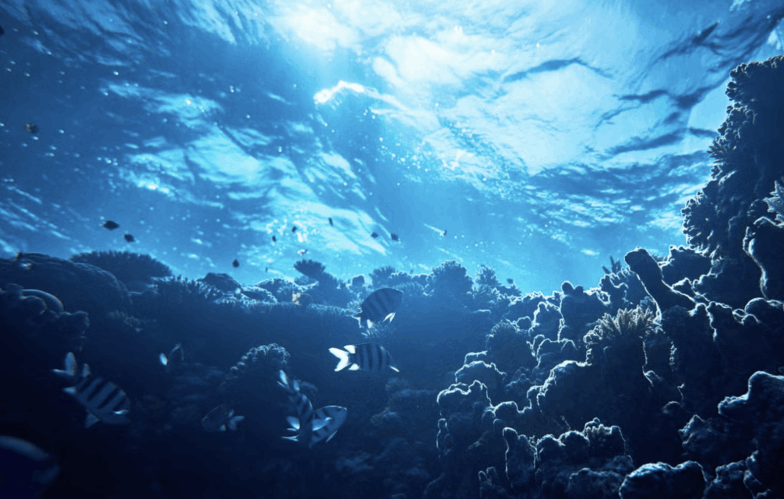
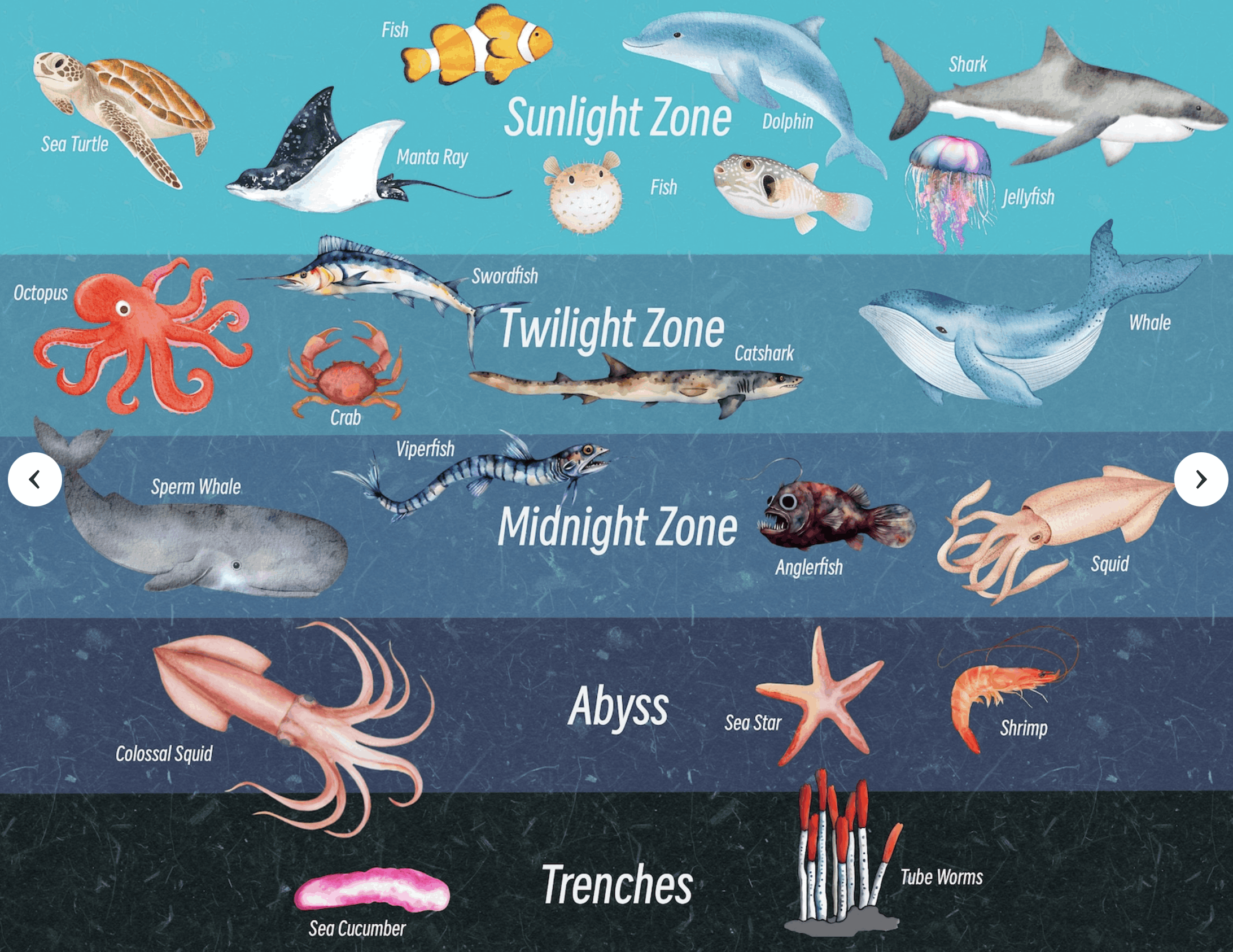
The Epipelagic Zone

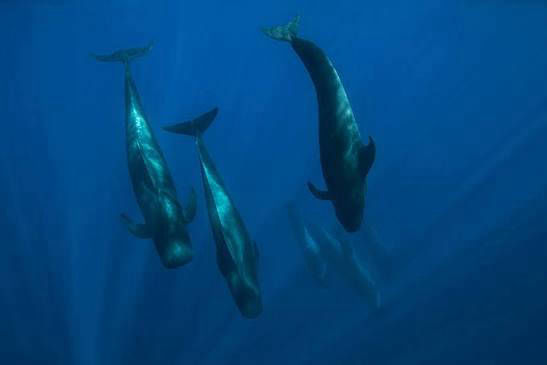
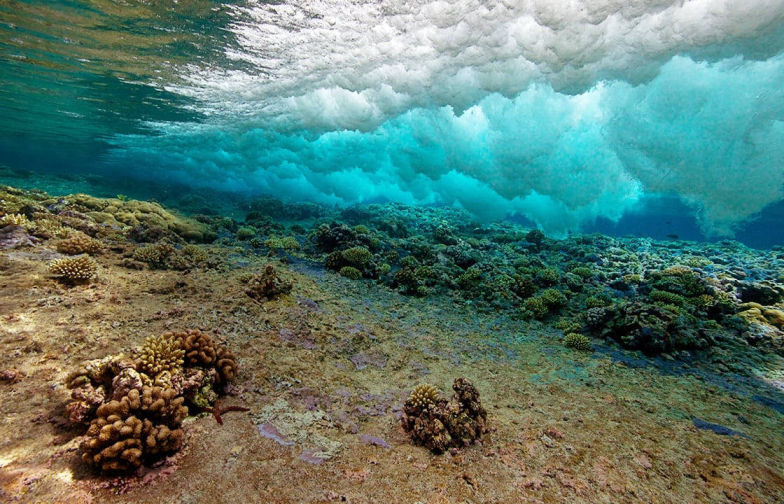
Sunlit Zone, the only layer with enough sunlight for photosynthesis. This is where ninety percent of all marine life, including coral reefs, kelp forests, and large marine mammals, thrives. Temperatures range from thirty-six degrees to minus two degrees Celsius depending on the location. The pressure starts at one atmosphere at the surface and increases up to twenty atmospheres at the bottom of this layer.

Flofaunes

The Mesopelagic Zone

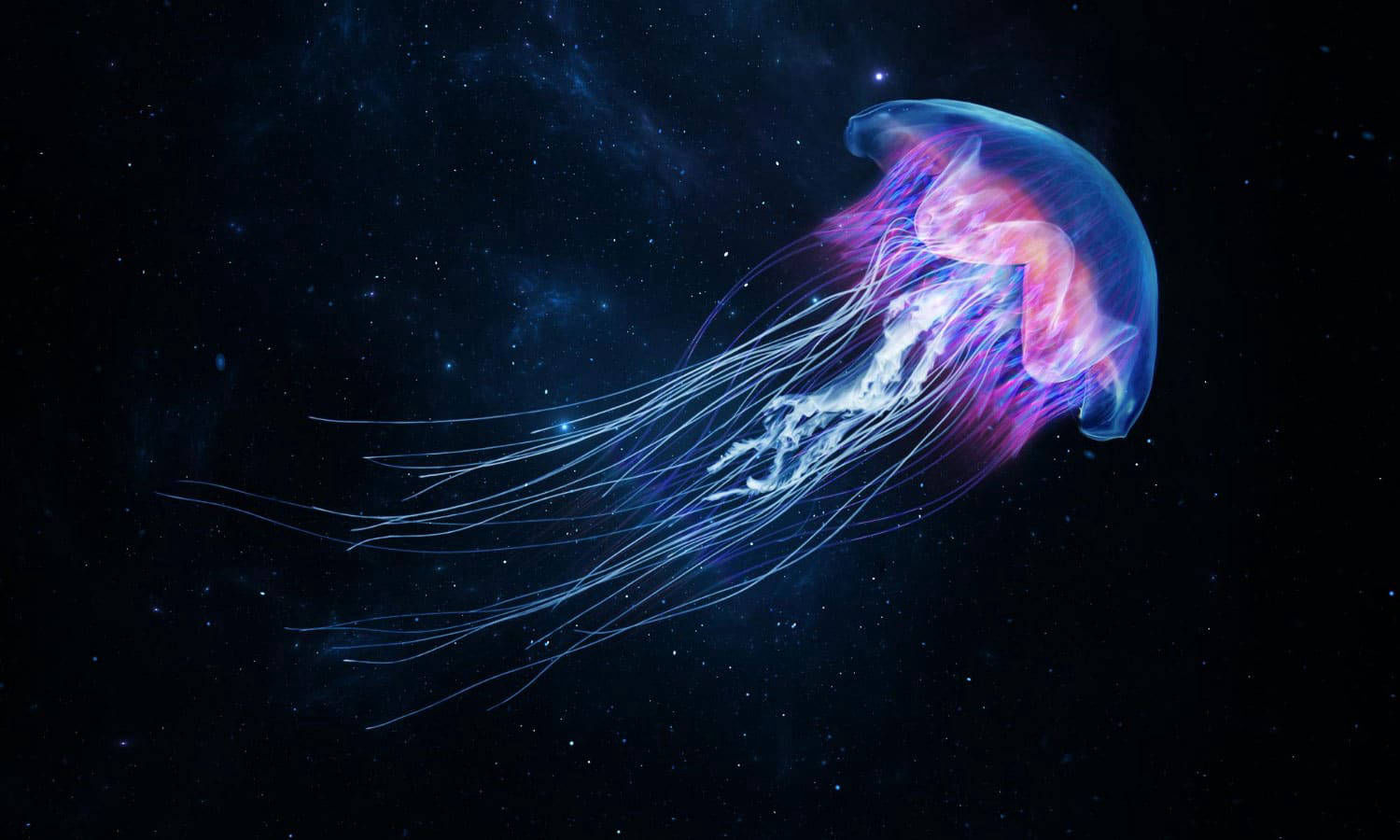
Twilight Zone, from one thousand to four thousand meters deep is a world of perpetual darkness near freezing temperatures and crushing pressure. Life relies entirely on nutrients drifting down from above known as marine snow. Temperatures remain constantly cold hovering between four degrees and one degree Celsius. The pressure becomes crushing starting at one hundred atmospheres and reaching four hundred atmospheres at the deep boundary.

Flofaunes

The Bathypelagic Zone

Midnight Zone, from one thousand to four thousand meters deep is a world of perpetual darkness near freezing temperatures and crushing pressure. Life relies entirely on nutrients drifting down from above known as marine snow. Temperatures remain constantly cold hovering between four degrees and one degree Celsius. The pressure becomes crushing starting at one hundred atmospheres and reaching four hundred atmospheres at the deep boundary.

Flofaunes

The Abyssopelagic Zone

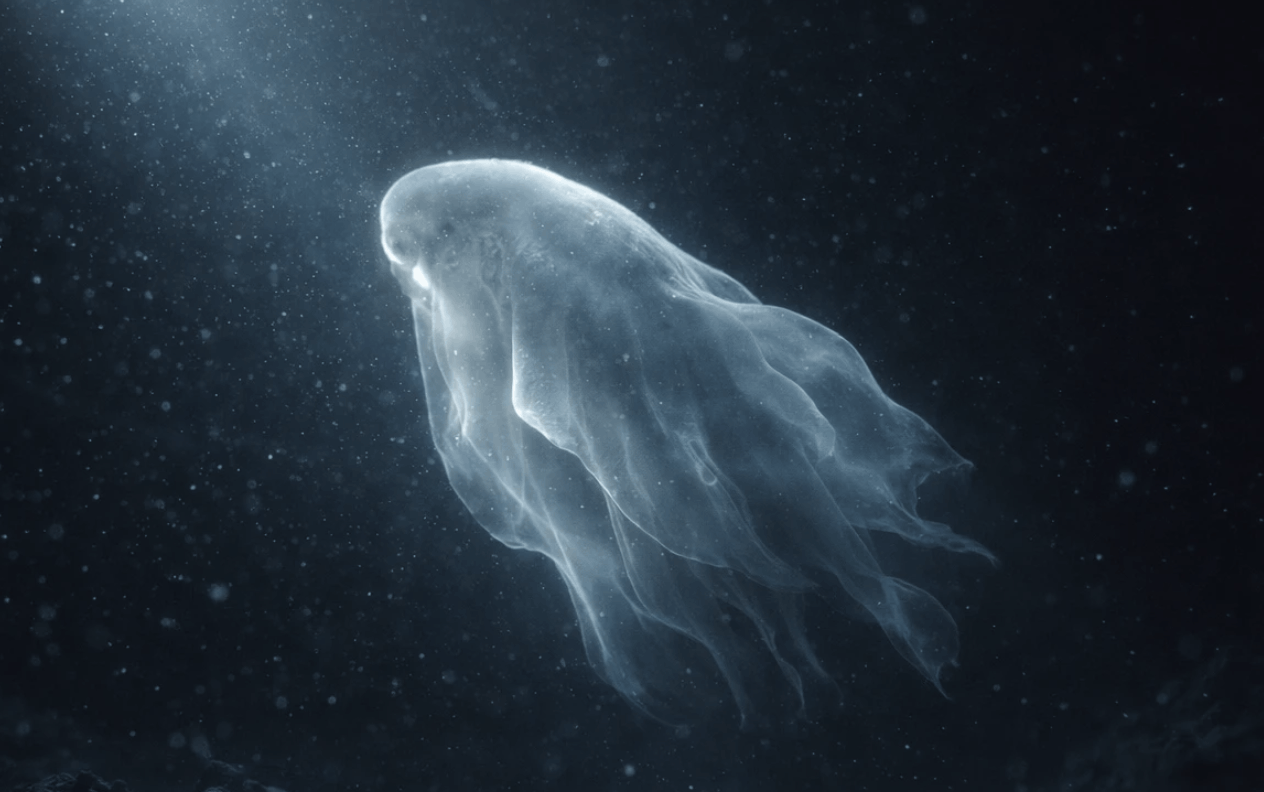
The Abyss Zone, from four thousand to six thousand meters deep is an extreme environment where the darkness is absolute and the pressure is immense. Specialized marine organisms are uniquely adapted to survive in these barren depths. Temperatures are near freezing staying between two degrees and zero degrees Celsius. The pressure reaches extreme levels starting at four hundred atmospheres and climbing to six hundred atmospheres.

Flofaunes

The Hadal Zone

The Trenches Zone, beyond six thousand meters deep is named after Hades the underworld. It consists of deep V shaped ocean trenches where specialized alien like organisms survive around boiling hydrothermal vents. Temperatures stay just above freezing between four degrees and one degree Celsius though boiling water can erupt from local hydrothermal vents. The pressure is devastating starting at six hundred atmospheres and exceeding one thousand atmospheres at the very bottom of the trenches.

Flofaunes

© 2026 Flofaunes. All rights reserved.

We should protect the ocean at all cost